Overview
This guideline covers diagnosing and managing renal cell carcinoma in people aged 18 and over. It aims to improve care by helping healthcare professionals offer people the right treatments and support, taking into account the person’s individual preferences.
For recommendations on identifying renal cell carcinoma in primary care, or when to refer people to a specialist, see NICE’s guideline on recognition and referral for suspected cancer.
The most important changes to practice in this guideline are:
- all people with renal cell carcinoma should have support from a clinical nurse specialist throughout their care
- healthcare professionals should identify people with suspected renal cell carcinoma who could benefit from having a biopsy and discuss this with them to help them make an informed decision
- active surveillance, thermal ablation and stereotactic ablative radiotherapy should be considered, when suitable, for managing localised small renal masses when surgery is not needed, possible or suitable.
Last reviewed: 19 March 2026
Next review: This guideline will be reviewed if there is new evidence that is likely to change the recommendations.
How we prioritise updating our guidance
Decisions about updating our guidance are made by NICE’s prioritisation board. For more information on the principles and process, see NICE-wide topic prioritisation: the manual.
For information about individual topics, including any decisions affecting this guideline, see the summary table of prioritisation board decisions.
Recommendations
This guideline includes recommendations on:
- general information for people with suspected or confirmed renal cell carcinoma
- diagnosing renal cell carcinoma
- managing oncocytomas and Bosniak 2F cysts
- managing localised and locally advanced renal cell carcinoma
- managing advanced renal cell carcinoma
- managing renal cell carcinoma in people with a heritable renal cell carcinoma predisposition syndrome.
See the visual summaries on:
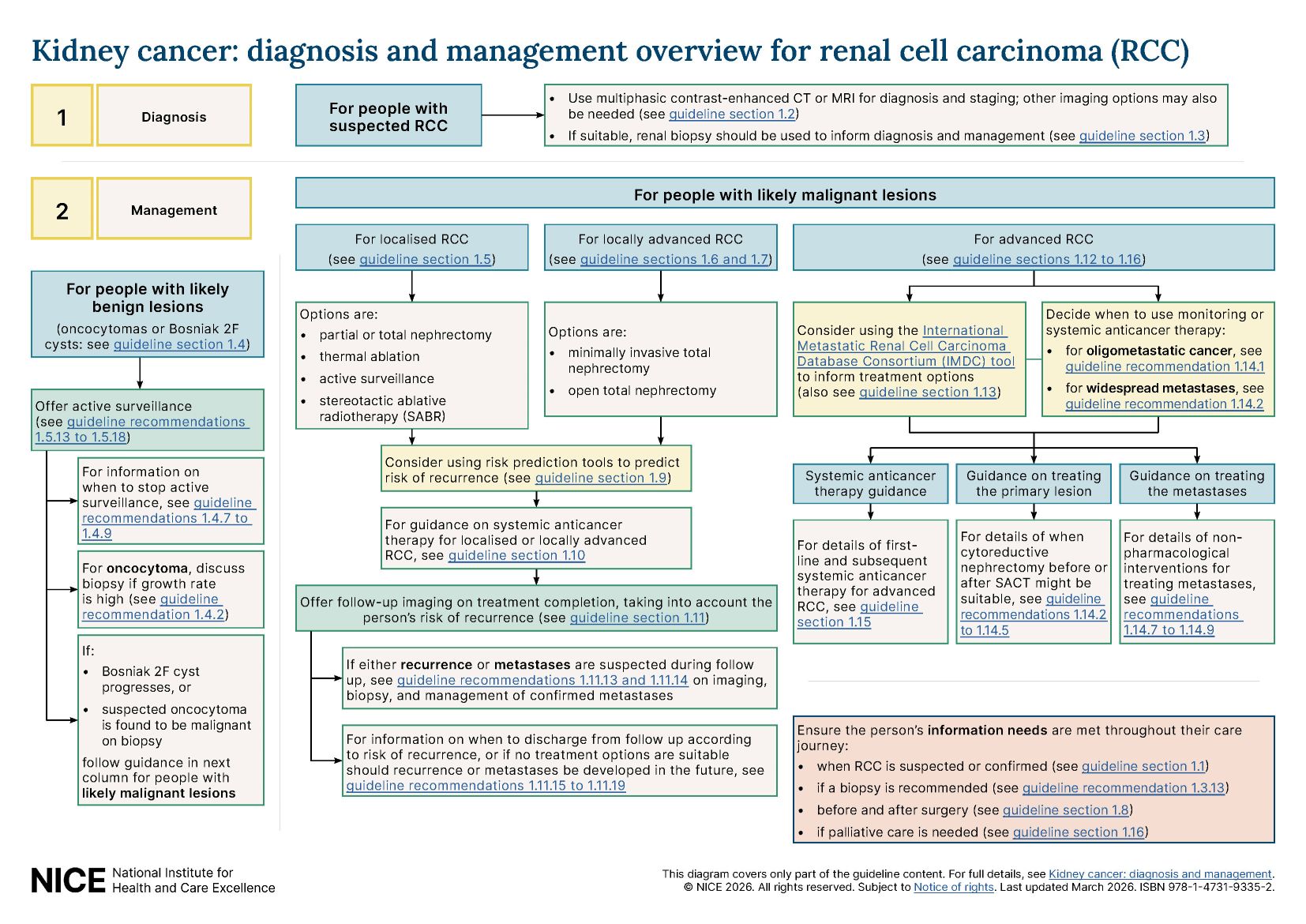
- diagnosis and management of renal cell carcinoma (overview of the guideline)
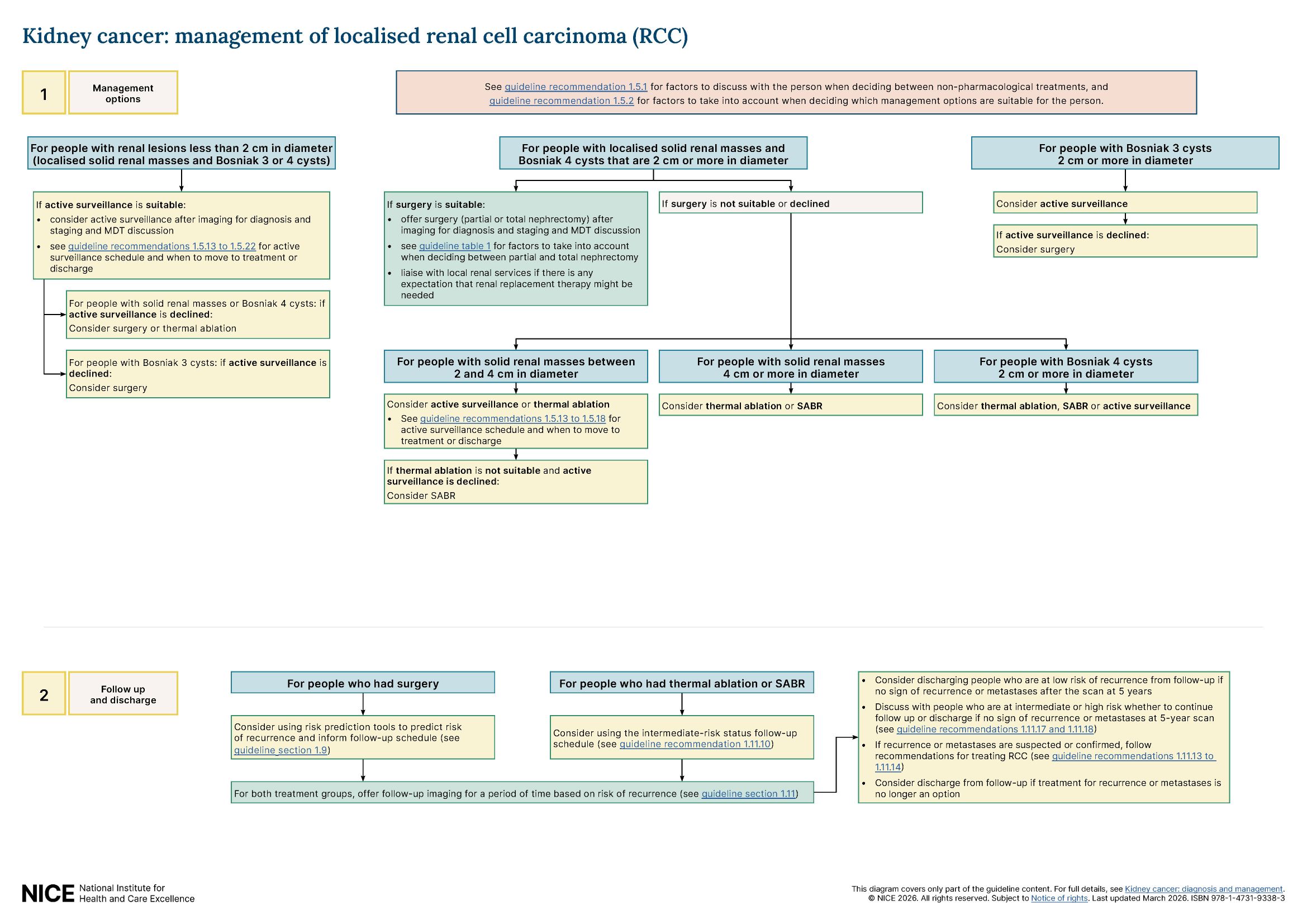
- management of localised renal cell carcinoma
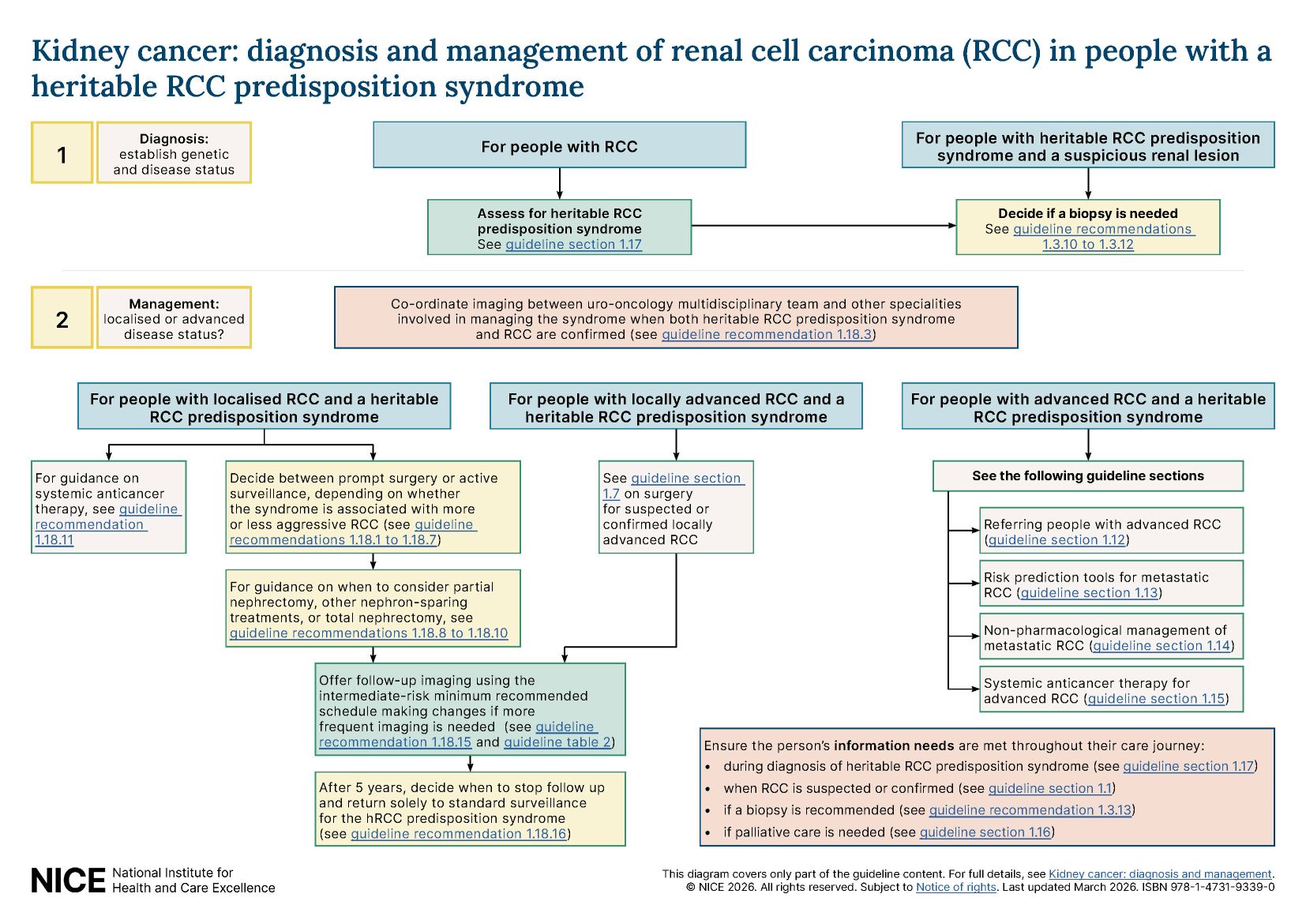
- diagnosis and management of renal cell carcinoma (RCC) in people with a heritable RCC predisposition syndrome
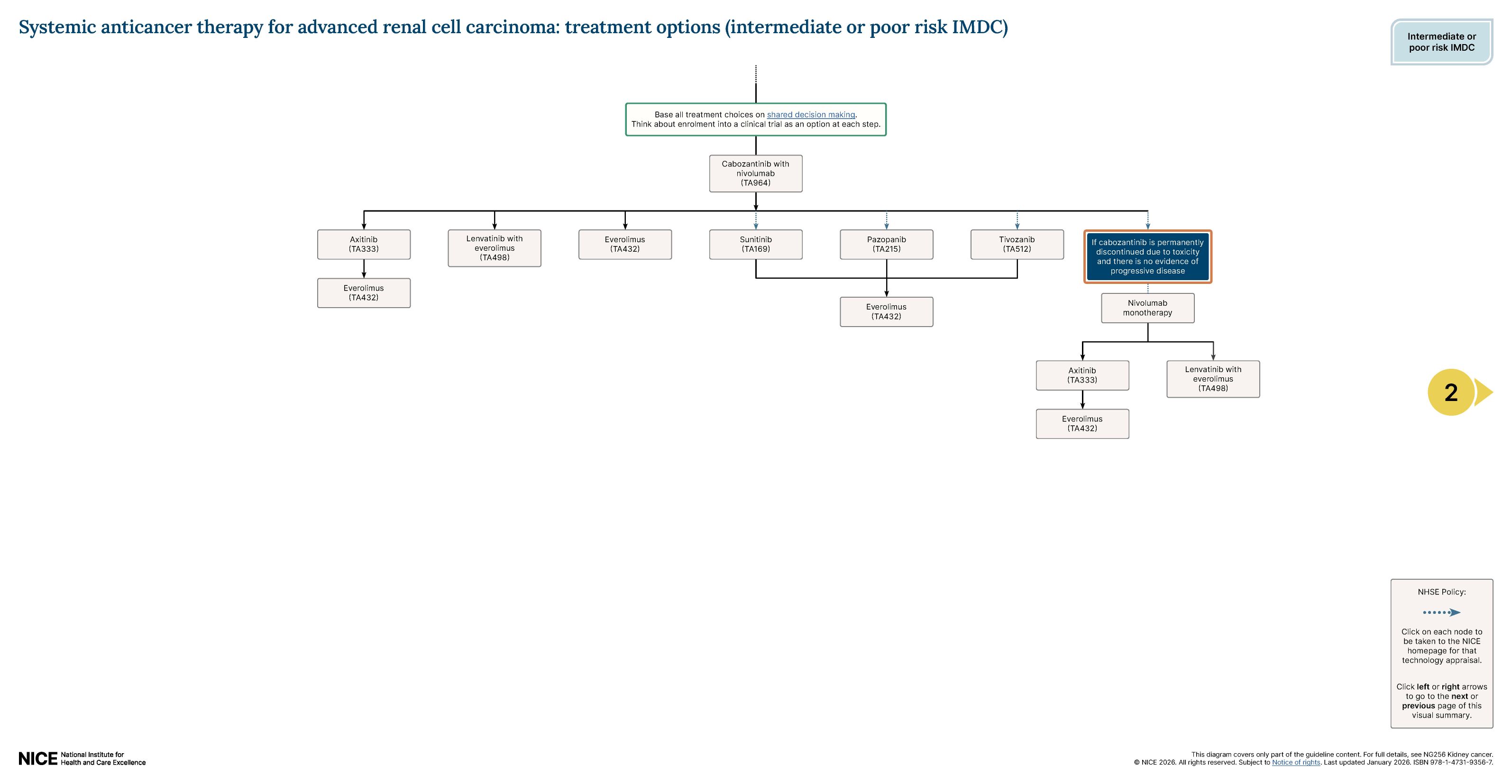
- systemic anticancer therapy options for advanced renal cell carcinoma (intermediate or poor risk IMDC)
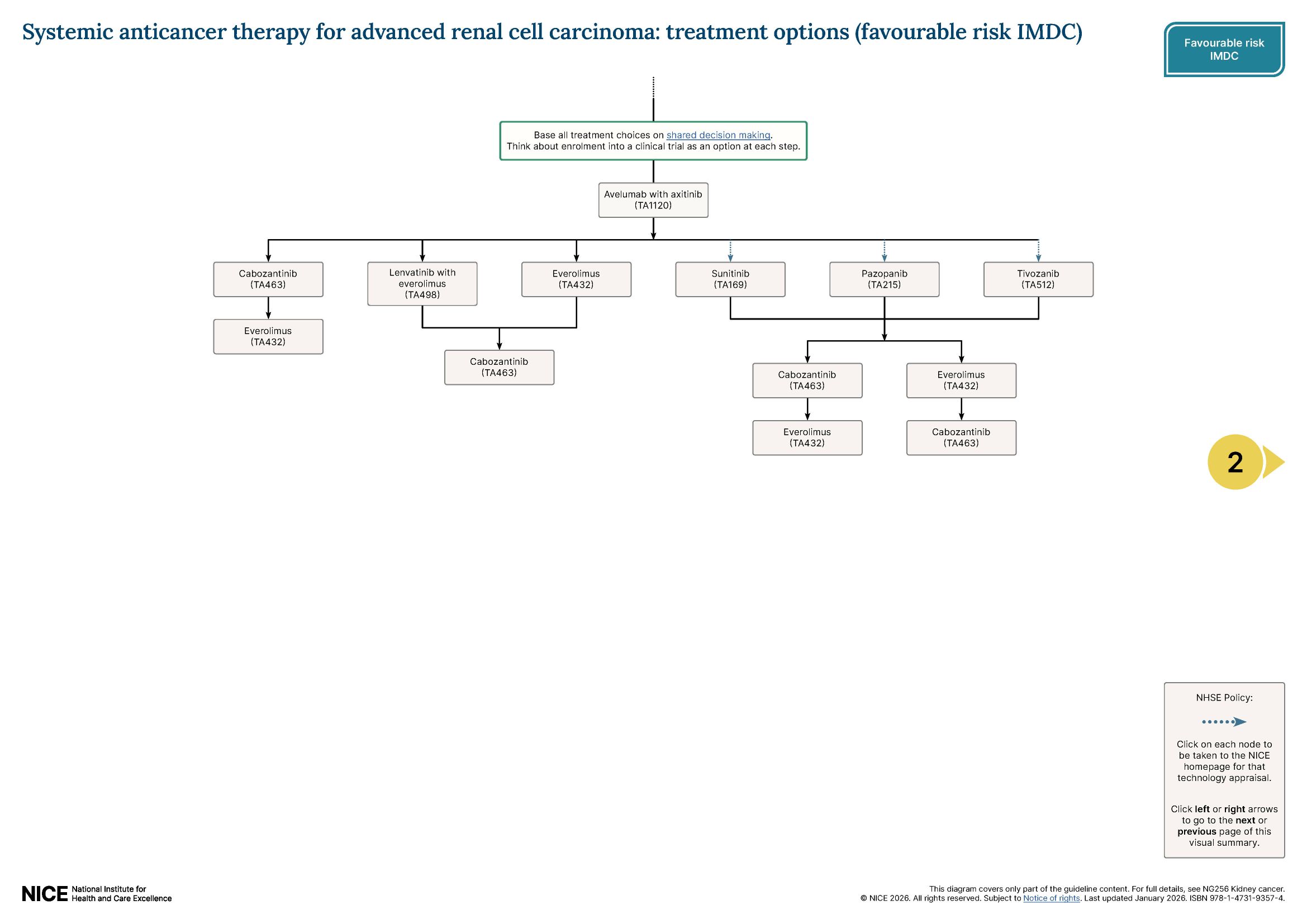
- systemic anticancer therapy options for advanced renal cell carcinoma (favourable risk IMDC)
Who is it for?
- Healthcare professionals
- Commissioners and providers of kidney cancer services
- People with suspected or confirmed renal cell carcinoma, their families and carers.
Guideline development process
How we develop NICE guidelines
Your responsibility
The recommendations in this guideline represent the view of NICE, arrived at after careful consideration of the evidence available. When exercising their judgement, professionals and practitioners are expected to take this guideline fully into account, alongside the individual needs, preferences and values of their patients or the people using their service. It is not mandatory to apply the recommendations, and the guideline does not override the responsibility to make decisions appropriate to the circumstances of the individual, in consultation with them and their families and carers or guardian.
All problems (adverse events) related to a medicine or medical device used for treatment or in a procedure should be reported to the Medicines and Healthcare products Regulatory Agency using the Yellow Card Scheme.
Local commissioners and providers of healthcare have a responsibility to enable the guideline to be applied when individual professionals and people using services wish to use it. They should do so in the context of local and national priorities for funding and developing services, and in light of their duties to have due regard to the need to eliminate unlawful discrimination, to advance equality of opportunity and to reduce health inequalities. Nothing in this guideline should be interpreted in a way that would be inconsistent with complying with those duties.
Commissioners and providers have a responsibility to promote an environmentally sustainable health and care system and should assess and reduce the environmental impact of implementing NICE recommendations wherever possible.